
For decades, discussions around the best methods for strengthening students’ reading comprehension have swung between two significant priorities. On one end: strategy instruction—teaching students to ask questions, draw inferences, summarize, and monitor their understanding. On the other: knowledge building—ensuring that students develop the background knowledge and vocabulary they need to make meaning from text.
The truth is, this isn’t a debate that requires a winner. Both are essential.
-
 Strategy Instruction
Comprehension strategies help students actively engage with text, therefore deepening their understanding of it. Teaching specific strategies equips students to process text more effectively, monitor their own thinking, and analyze complex ideas. -
 Knowledge Building
As students expand what they know about the world, they are better able to connect new information to prior learning, draw inferences, and deepen understanding. When teachers emphasize knowledge building—both in reading and in other content areas—students gain the background knowledge and context that support strong reading comprehension.
There’s MORE!
-
 Text Structure
Understanding common text structures helps readers recognize patterns and see relationships between ideas. Explicit instruction in text structures gives students a framework for organizing information, making it easier to comprehend, and retain, what they read. -
 Question Types
Comprehension grows when students engage with questions that address different levels of understanding. Teaching them how to respond to a variety of question types equips readers to think critically and demonstrate their learning in academic settings. -
 Vocabulary
Knowing more words makes it possible for students to understand more of what they read. Prioritizing vocabulary development—through explicit instruction and exposure in context—ensures students can access more complex texts and engage with a wider range of content. -
 Academic Language
Academic language gives students the vocabulary and structures they need to understand and communicate complex ideas across subjects. By intentionally using/modeling, teaching, and reinforcing these words and phrases, teachers help students engage with grade-level texts, participate in discussions, and express their understanding with clarity and precision.
Reading comprehension is complex. Quality reading comprehension instruction requires thorough, direct instruction in comprehension strategies and academic language, paired with structured support in meaningful, content-rich, and knowledge-building contexts. Plus, students need abundant opportunities to practice throughout their years in school and across multiple subject areas.
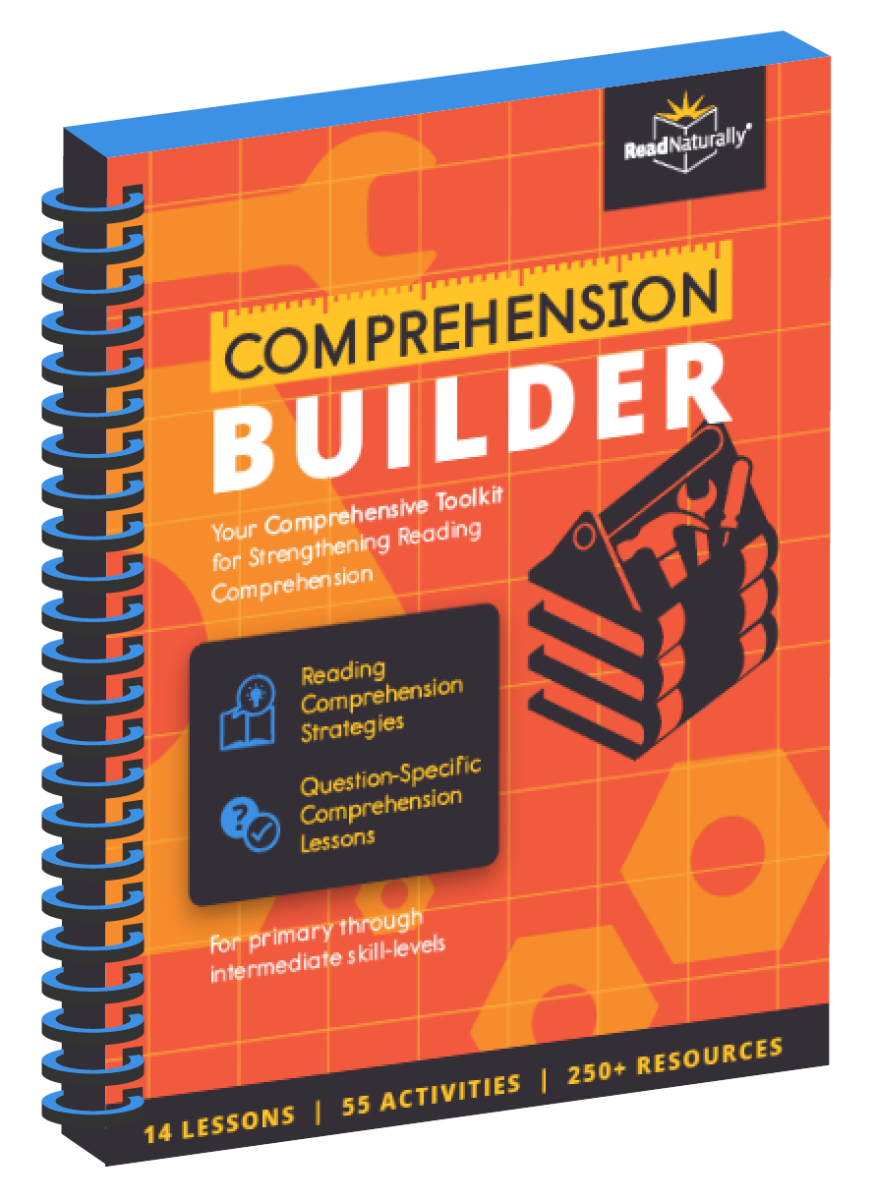 That’s why we created Comprehension Builder—a practical resource designed to make it easy for teachers to effectively and efficiently develop lasting comprehension skills for readers, regardless of age, instructional setting, time constraints, or areas of need.
Comprehension Builder provides highly adaptable lessons and resources that can be used consistently and consecutively, or on an as-needed basis. It makes use of explicit teaching, modeling, gradual release of responsibility, collaborative learning, frequent opportunities to respond (OTR), and scaffolded support. It includes high-interest, knowledge-building text with rich vocabulary, numerous options for adapting and differentiating instruction, and suggestions for extending practice beyond the lessons
Click here to learn more about Comprehension Builder and download two free, ready-to-use lessons.
Relevant links:
- Comprehension Builder: Basics (webinar)
- What Is Reading Comprehension? (article)
 Share your student’s success story—nominate him or her for our Star of the Month award. Win a Barnes & Noble gift card for the student and a Read Naturally gift certificate for your class!

Post a New Comment